On Oct. 14, 2026 U.S. Customs and Border Protection officers at Indianapolis’ express consignment facility intercepted a shipment containing 300 counterfeit Audemars Piguet watches. Had these items been genuine, the shipment would have had a combined manufacturer’s suggested retail price of $12 million. Click here to see more articles on counterfeit merchandise.
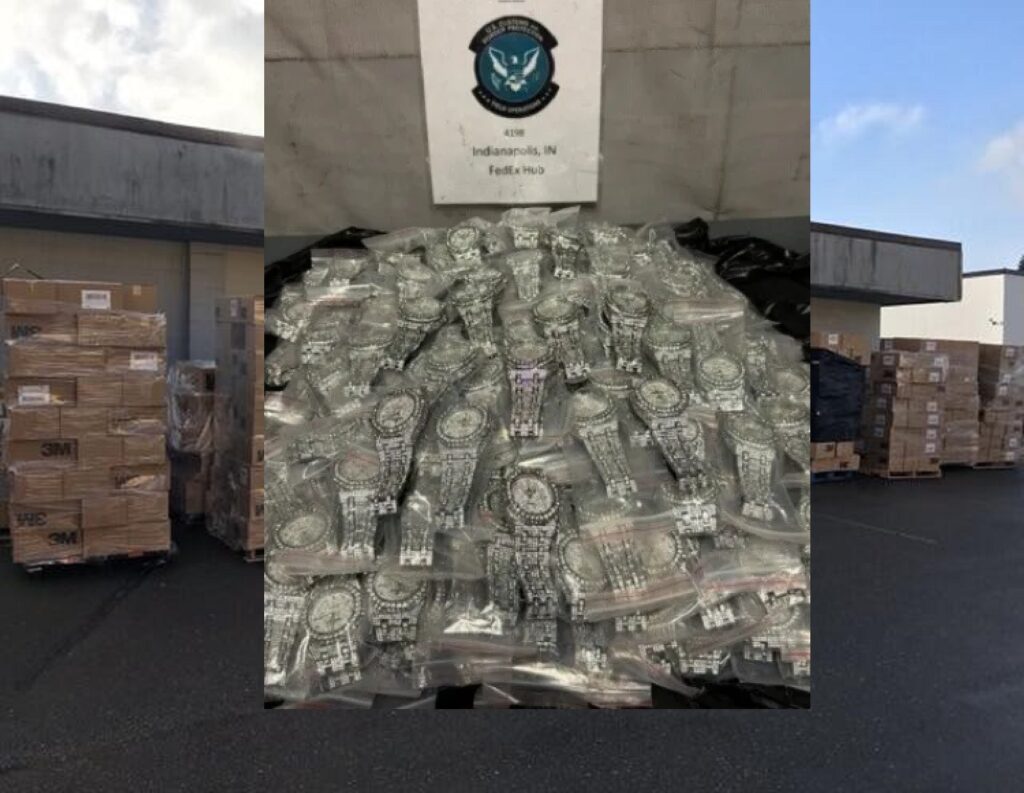
The shipment from Hong Kong was headed for Illinois when officers pulled the parcel for inspection. The examination revealed 300 watches bearing the Audemars Piguet trademark. The items were deemed to be inauthentic by CBP’s Centers of Excellence and Expertise, the agency’s trade experts, and were seized for bearing counterfeit versions of registered and recorded trademarks.
Acting Director of Field Operations for the Chicago Field Office, Michael Pfeiffer says:
“Proceeds from the sale of counterfeit goods have been found to fund criminal organizations who are often also involved in money laundering, drug trafficking, and other illicit trade. As consumers increasingly purchase from online or third-party vendors, our officers are at the frontline to guard against defrauders expecting to make money selling fake merchandise.”
Illegitimate sales are some of the most profitable transnational crimes. Counterfeiters sell inauthentic versions of popular products in response to trends, often through online sources, which adversely impacts legitimate U.S. businesses.
These items include fake medications, perfumes, cosmetics, children’s toys and costumes, fashion, jewelry, and luxury products, and unsafe electronics and automotive parts, which can pose serious health and safety risks as they are often made with substandard or harmful materials.
Handbags, wallets, apparel, footwear, watches, jewelry, and consumer electronics are at a higher risk of being counterfeited. Counterfeit versions of popular brands are regularly sold in online marketplaces and flea markets.
Not only are counterfeit goods produced in unregulated and potentially exploitative environments in foreign countries, but the profits from their sales provide a funding stream for organized crime.
Counterfeit goods can often be spotted by their inferior quality. Peeling labels, low-quality ink or printing errors on the packaging, and the quality of the packaging can be signs that the product you purchased may not be legitimate. Counterfeit apparel and handbags may feature poor or uneven stitching, be improperly sized, or not exist as a product the designer brand produces at all. The performance of counterfeit electronics is often marked by short battery life and regular overheating.